




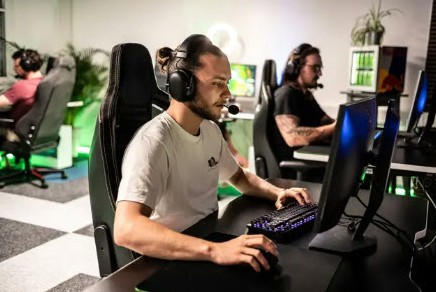
Have you ever chatted with someone halfway across the planet during a game and felt like you already knew them?
That simple moment says a lot about how online gaming has become a shared language across borders. People who do not speak the same native tongue can still coordinate, compete, joke, and build trust through the same rules, reactions, and in-game habits.
What makes this so interesting is that online gaming does not depend on perfect grammar or formal conversation. It runs on timing, tone, repetition, and small signals.
A quick emote, a map ping, or a short phrase can mean more than a long speech. In many cases, players learn to understand each other through action first and words second.
Shared Rules Create Shared Meaning
The first reason online gaming crosses borders so well is simple: the rules are already known.
Common Objectives Cut Through Language Gaps
In many games, players do not need a long explanation to know what matters. Capture the point, protect the base, find the objective, or survive the round. Because the structure is fixed, players can understand the goal from the moment they join. That makes the experience easier to share across languages than a conversation that depends on precise wording.
That is why a match can feel familiar even when the players come from very different places. A team on one continent can speak in clipped messages and still work together with a level of coordination that feels almost natural. In spaces like tangandewa, that kind of cross-border interaction shows how digital play creates habits people recognize almost immediately.
Repetition Builds Fast Understanding
When people play together often, they start reading patterns. A teammate who runs ahead may mean attack now. A player who stays back may be signaling caution. Over time, these repeated actions form a kind of practical vocabulary. It is not formal language, but it works because everyone learns the same cues through play.
Even small visual signals help build that shared meaning. A marker on the screen, a quick gesture, or a short message can replace long explanations. In a live match, speed matters, so players learn to communicate in the shortest useful form. That habit makes teams more effective and also makes the space feel more inclusive.
Play Styles Travel Faster Than Words
Culture moves through games in subtle ways, and players often pick up habits from people far outside their own country.
Local Habits Become Global Habits
Different regions often develop distinct play styles, but those styles spread quickly once players meet online. A methodical approach from one area can be copied by teams elsewhere. A fast, aggressive style can influence people who originally played in a slower way. Because matches happen in real time, players learn from each other by watching, not just by talking.
Humor And Emotion Travel Well
Games also carry emotional shortcuts. A win, a loss, a comeback, or a last-second save creates the same reaction in most people. That is why players can laugh at the same mistake or celebrate the same clutch moment without sharing a common first language. Shared emotion becomes its own form of communication, and that can be even more memorable than a sentence.
Social spaces around games have made this even more visible. Message boards, chat rooms, and live voice channels let people mix slang, abbreviations, and game-specific terms into a common style of talk. A player in one country can type a short message and be understood by teammates on the other side of the planet. The language may be mixed, but the meaning stays clear.
Cross-Border Play Builds Real Connection
Online gaming does more than help people coordinate. It also creates repeated contact, and repeated contact builds familiarity.
Trust Grows Through Small Moments
When players keep showing up for each other, they start building trust. Someone revives a teammate, shares resources, or covers a risky move, and that action matters. Over time, those tiny acts create a sense of reliability. In many cases, players remember who stayed calm under pressure long before they remember exact phrases.
Final Thoughts
When people across borders can play, speak, and think together inside the same match, they are not just using a platform. They are building a common language made from rules, rhythm, and mutual respect. That is why online gaming keeps connecting people in ways that feel both simple and surprisingly human.





Leave a comment